





Gruyere is one of the great cheeses of the Alps, a firm cow milk cheese from western Switzerland that has become a fixture on cheese boards and in kitchens across Europe. It melts without turning greasy, carries a deep nutty flavour and works as happily grated into a gratin as it does sliced onto bread. This guide covers where it comes from, how it is made, how the taste changes with age, and the best ways to buy, keep and use it. In the shop it sits within the selection of gruyere and other cheeses for melting.
| Origin | Fribourg region, western Switzerland (AOP) |
| Milk | Raw cow milk |
| Type | Firm, cooked and pressed |
| Ageing | 5 to 18 months |
| Taste | Nutty, fruity and savoury |
Where Gruyere comes from
Gruyere takes its name from the town of Gruyeres in the Fribourg region of Switzerland, where it has been made since at least the twelfth century. Today it carries a protected designation of origin, which means genuine Le Gruyere AOP can only be produced in a defined area of western Switzerland and must follow set rules on milk, method and ageing. The milk comes from cows fed on grass and hay, with silage not allowed, which keeps the flavour clean and lets the character of the mountain pastures come through.
A point that causes endless confusion is the difference between Swiss Gruyere and the French style. True Swiss Gruyere has a dense paste with no holes, while the French version carries a protected geographical indication and does have small holes. The cheese with large holes that many people picture is usually Emmental, a different cheese again.
How it is made
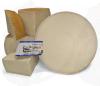
Gruyere is made in large wheels of around thirty five kilograms. Fresh raw milk is warmed in a copper vat, set with rennet and cut into small grains, then heated further and pressed into moulds. The young wheels are bathed in brine, which starts the rind, and then moved to cool, humid cellars. There they are turned and rubbed with salted water for months, which builds the natural rind and slowly concentrates the flavour. It takes roughly four hundred litres of milk to make a single wheel, which is part of why a good Gruyere carries such depth.
Taste, and how ageing changes it
Young Gruyere, aged around five to six months, is supple and mild with a clean milky sweetness and a gentle nutty note. As it matures it firms up and the flavour grows richer and more savoury.
- Mild, around five months, is soft in flavour and easy to like, good for everyday slices and for melting.
- Reserve, aged ten months or more, is firmer and more intense, with pronounced nutty and earthy notes.
- Alpage, made in summer from the milk of cows grazing high mountain pastures, is prized for its complex, herbal depth.
In well aged wheels small white crystals appear in the paste. These are tyrosine, a natural result of long ageing, and they give a pleasant crunch rather than any fault.
How to recognise good Gruyere
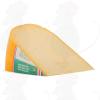
A good piece has an even, ivory to pale gold paste with no cracks and only the small crystals of age. The rind is firm and grainy, brownish and natural, never waxed. The smell should be nutty and clean. Buying a piece cut from the wheel, rather than a pre packed block that has sat for weeks, makes a clear difference to both aroma and texture.
Storing it
Keep Gruyere in the fridge wrapped in paper or waxed paper rather than tight plastic, so the paste can breathe without drying out. A drop of moisture on the surface is normal and can be patted away. Take it out of the fridge around half an hour before serving, since a cold cheese hides much of its aroma. Stored well, a piece keeps its quality for two to three weeks.
Cooking and pairing
Gruyere is one of the classic melting cheeses. It is the heart of a Swiss fondue, often blended half and half with Vacherin Fribourgeois, and it gives depth to gratins, quiche, croque monsieur and the crust of a French onion soup. Because it melts smoothly and does not turn oily, a little goes a long way in warm dishes. For a melting spread on the table it pairs naturally with the cheeses in a raclette and fondue range. On a cheese platter it sits well beside fruit, walnuts and cured meats. For drinks, a dry white such as a Riesling or a Chasselas suits it, as does a light red or a glass of dry cider.
Order this cheese online
Cut fresh from the wheel, carefully vacuum packed and delivered chilled, fast and fresh across Europe.
Shop the cheese