




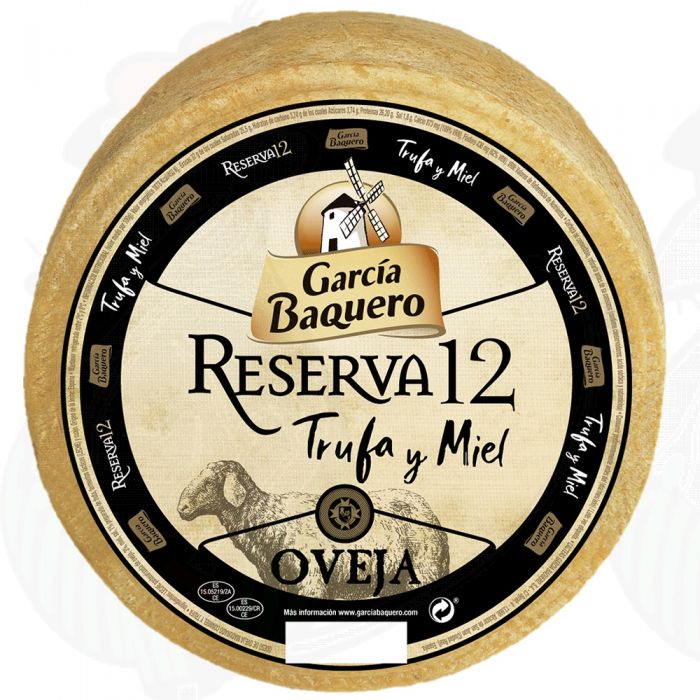
Manchego is Spain's most famous cheese, a firm sheep milk cheese from the plains of La Mancha with a distinctive woven rind and a rich, nutty flavour. It is as good sliced with a glass of red as it is melted into a dish, and it ranges from mild and young to sharp and long aged. This guide covers where it comes from, how it is made, how ageing changes it, and how to buy, keep and serve it. In the shop it sits within the selection of manchego and other sheep cheeses.
| Origin | La Mancha, central Spain (DOP) |
| Milk | Manchega sheep milk |
| Type | Firm, pressed |
| Ageing | 2 to 24 months |
| Taste | Nutty, buttery, piquant when aged |
Where Manchego comes from
Manchego comes from the high, dry plateau of La Mancha in central Spain, the landscape of Don Quixote. It is made only from the milk of Manchega sheep, a hardy local breed suited to the harsh climate, and it carries a protected designation of origin that sets out the area, the breed and the method. Cheese has been made here for thousands of years, and the woven pattern pressed into the rind recalls the old grass moulds once used to shape it.
How it is made
Manchego is made from whole sheep milk, which is richer and higher in fat than cow milk and gives the cheese its rounded, buttery character. The milk is set with rennet, the curd is cut and pressed into cylindrical moulds, and the young cheeses are salted in brine. They are then aged from a couple of months to two years. The classic zig zag pattern on the rind and the wheat ear print on the flat faces are marks of a genuine Manchego.
Taste, and how ageing changes it
Age is the main thing to look for on a label, since it changes the cheese completely.
- Semicurado, around three months, is supple and mild with a fresh, milky, lightly nutty taste.
- Curado, six months to a year, is firmer and more savoury, with caramel and nutty notes.
- Viejo, over a year, is hard and intense, sharp and slightly peppery with a long finish.
The paste is ivory to pale yellow, close textured with a few small eyes, and richer in the mouth than a comparable cow cheese.
How to recognise good Manchego
Look for the woven zig zag rind and the wheat ear stamp, and a label naming it as Manchego with an age. Genuine Manchego is always pure sheep milk. The paste should be even and firm, and in older cheeses a little oiliness at room temperature is a good sign of the fat from the sheep milk. A piece cut from the wheel keeps far more aroma than a vacuum block left for months.
Storing it
Keep Manchego in the fridge wrapped in paper rather than tight plastic. If it came coated in oil that is normal for aged wheels. Take it out around half an hour before serving, since the buttery notes only come forward at room temperature. A firm piece keeps well for two to three weeks, and harder aged pieces even longer.
Cooking and pairing
Manchego is at its best sliced into thin triangles as a tapa, with quince paste, marcona almonds, olives and a glass of Rioja or Tempranillo. Younger pieces melt nicely over vegetables or into a tortilla, while aged Manchego is better grated as a finishing cheese. It brings a rich, savoury note to a cheese platter beside milder styles. For a non alcoholic pairing, grape juice or a dark cherry drink echoes the classic Spanish match of cheese and fruit.
Order this cheese online
Cut fresh from the wheel, carefully vacuum packed and delivered chilled, fast and fresh across Europe.
Shop the cheese