





Stilton is England's most famous blue cheese, a rich, creamy cheese shot through with blue veins and a deep, tangy flavour. Often called the king of English cheeses, it is a Christmas classic and a serious pleasure any time of year. This guide covers where it comes from, how the blue develops, how to recognise a good one, and how to store, serve and pair it. In the shop it sits within the selection of stilton and other blue cheeses.
| Origin | Central England, three counties (PDO) |
| Milk | Cow milk |
| Type | Blue veined, semi soft |
| Ageing | 9 to 15 weeks |
| Taste | Rich, creamy, tangy and savoury |
Where Stilton comes from
Stilton carries a protected designation of origin and may only be made in three English counties, Derbyshire, Leicestershire and Nottinghamshire. It takes its name from the village of Stilton, where it was famously sold to travellers, though it was never actually made there. Only a handful of dairies are licensed to produce it, which keeps the tradition tightly controlled.
How the blue develops
Stilton is made from cow milk, with a blue mould culture added to the milk. After the curd is set and drained, the young cheese is shaped and left to form a natural crust. After some weeks it is pierced with stainless steel needles, letting air into the paste. The oxygen lets the blue mould grow along the channels, creating the network of blue green veins that spreads through the cream coloured paste.
Taste and texture
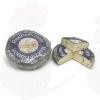
A good Stilton is firm but yielding, moist rather than crumbly dry, with a cream coloured paste and evenly spread blue veins.
- The paste is rich and buttery, with a deep savoury tang.
- The blue brings a peppery, slightly spicy edge that builds towards the veins.
- Younger Stilton is milder, while a mature one is stronger and more complex.
Storing it
Keep Stilton in the fridge wrapped in foil or waxed paper to protect the paste and stop it drying. Take it out around half an hour before serving so the flavour and creaminess come forward. Once cut, use it within a week or so, as blue cheese continues to develop quickly.
Serving and pairing
Stilton is wonderful simply with crackers, walnuts, celery and a pear, and it crumbles beautifully over a salad or into a creamy sauce for steak or pasta. On a cheese platter it is the bold finish beside milder cheeses. The classic pairing is a glass of port, but it also loves a sweet dessert wine, a rich red or a drizzle of honey.
Order this cheese online
Cut fresh from the wheel, carefully vacuum packed and delivered chilled, fast and fresh across Europe.
Shop the cheese